
Tags
2025, birds, cosmic wisdom, death, Filipino, Filipino translation, flourishing, grieving, lark, life, Margaret Avison, mindfulness, new year, Poetry, recovery, renewal, snow, starling, swallows, Tagalog, Tagalog translation, translation, Winter
Translated to Tagalog / Filipino by Su Layug
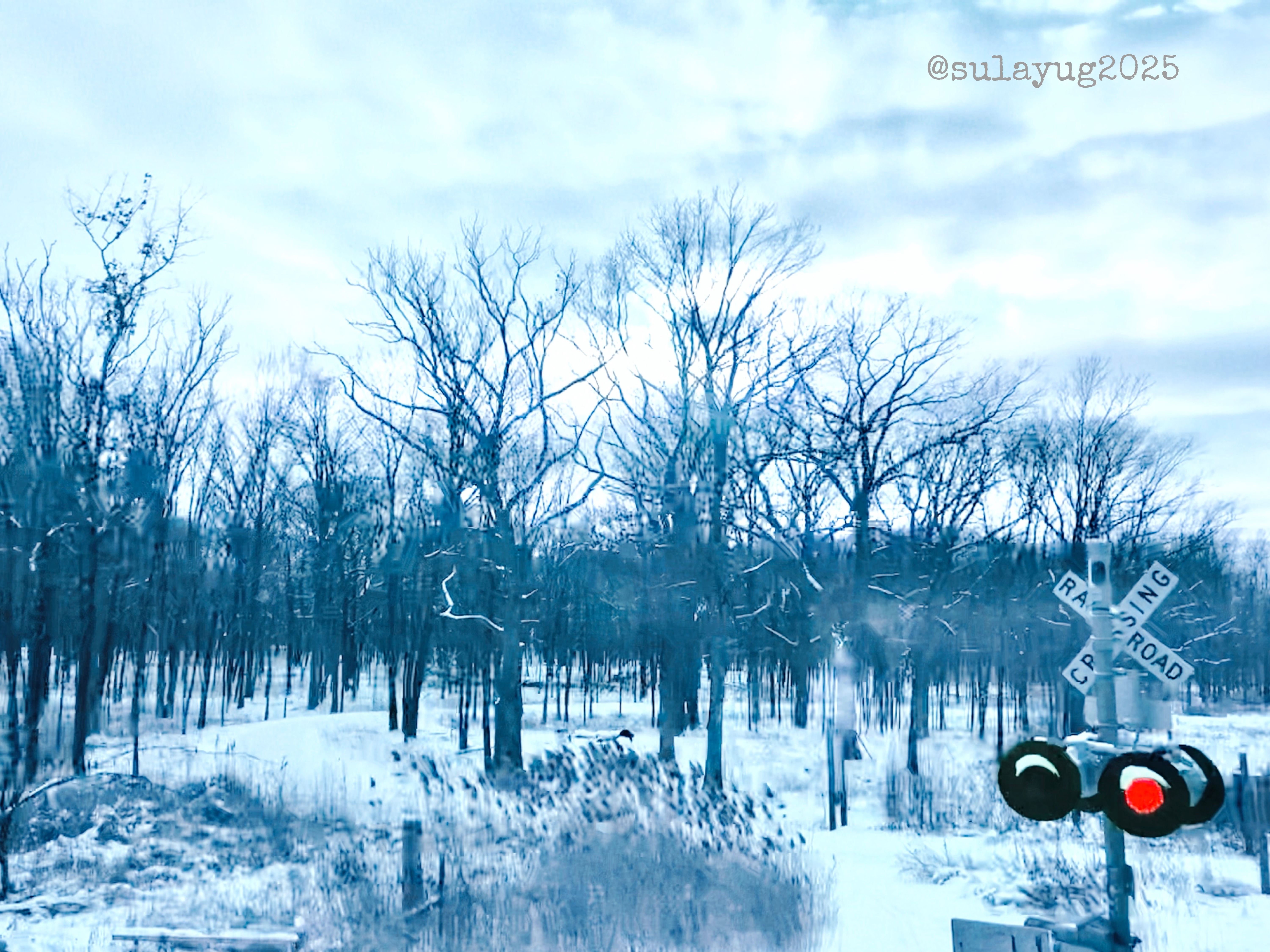
          Naaalala ko
Ang bigat-balaning halimuyak ni Anne, ang di-matinag na puntod
Na mumunti lamang ang nakukupkop ng lamig;
Magiliw kong binabakas ang mga bungo at brasong buto
Mga anyong kinahig ng mga kulansiyang at langay-langayan, sa pagkuha nila ng rabaw,
At ang mahabang silo ng amihan
Nililinaw ang pagkurba ng arko nito, mula sa bituing Arcturus
Hanggang sa laryong kanto ng patyo,
At sa pasimanong walang-galaw.
         Malumanay at makatarungang kasiyahan
bilang nilalang ang makamit mula sa kalawakan
Itong maligamgam at napagnanahanang kalooban
Na tahimik na sumasalamin sa sinag
ng (harayang) niyebe, at ng bagong taon.
             I remember
Anne’s rose-sweet gravity, and the stiff grave
Where cold so little can contain;
I mark the queer delightful skull and crossbones
Starlings and sparrows left, taking the crust,
And the long loop of winter wind
Smoothing its arc from dark Arcturus down
To the bricked corner of the drifted courtyard,
And the still window-ledge.
             Gentle and just pleasure
It is, being human, to have won from space
This unchill, habitable interior
Which mirrors quietly the light
Of the snow, and the new year.
Translator’s notes:
One of the challenges of translating from a language of one climate zone to another of a different climate zone is the concept of the seasons. The original English was clearly written in the context of the temperate zone of the northern hemisphere where snow commonly exists at the turning of the year, whereas Filipino / Tagalog is a language from a tropical climate. Two considerations:
1) the migration of birds, which is, to me, a central concept in the passing of time and the subtle shifting of sentiments, whether natural or induced, is seen by this translator as crucial in the portayal of emotional flourishing–and survival. The lark is perceived as the common-and-yet heroic bird, rising at the dawn of day, a natural bringer of joy with its songs, cited in many poetic lines, such as Shakespeare’s Sonnet 29. The starling, in contrast, is the less-than-heroic one which tends to be destructive to fruits and other vegetation, and yet is remarkable in its mimicry of other birds and sounds, as though such pretense is crucial for existence, even survival.
The translation, to Filipino, however, does not equate to the actual names of the birds. Though also migratory, the Philippine starling (kulansiyang) remains the less-than-heroic one, with its noise-making as its most recognizable feature, though not the mimicry of the northern hemisphere starling. The langay-langayan, which is the equivalent of the swallow (and not the lark), is the more graceful, poetic bird in this translation. It is usually associated with grace, hope, and renewal.
2) In translating “snow” I have opted to include the notion that “niyebe” (Spanish-derived word for “snow”) may be imagined as signified by the parenthesized word “haraya” (imagined). With this duality, the context then shifts back-and-forth from the experience of a Filipino who may have never left the Philippines, but is intellectually familiar with snow, to that of a Filipino who has migrated to a country where snow is a real experience. In either case, the experience of snow as part of the awakening, and/or survival/recovery/grieving/flourishing/renewal process, in its complexity, is real, whether to a migratory or a colonized mind, or both
The full English poem can be read here: https://www.poetryfoundation.org/poems/51733/new-years-poem?utm_source=Poetry%20Foundation&utm_campaign=bc1922be67-NO_TITLE&utm_medium=email&utm_term=0_ff7136981c-bc1922be67-185698833&mc_cid=bc1922be67&mc_eid=3b56d6ba23
 waterjug