
Tags
2025, birds, cosmic wisdom, death, Filipino, Filipino translation, flourishing, grieving, lark, life, Margaret Avison, mindfulness, new year, Poetry, recovery, renewal, snow, starling, swallows, Tagalog, Tagalog translation, translation, Winter
Translated to Tagalog / Filipino by Su Layug
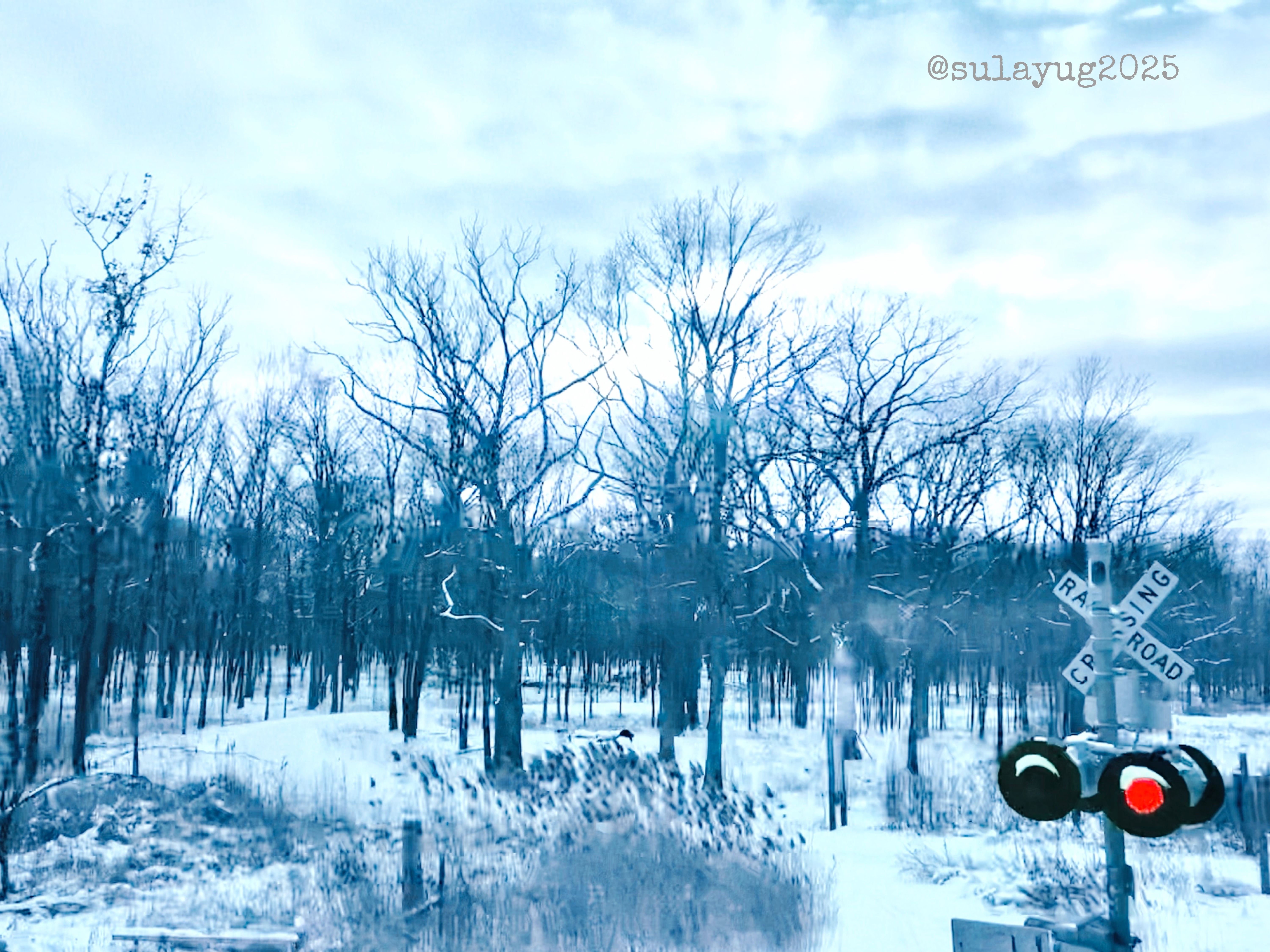
          Naaalala ko
Ang bigat-balaning halimuyak ni Anne, ang di-matinag na puntod
Na mumunti lamang ang nakukupkop ng lamig;
Magiliw kong binabakas ang mga bungo at brasong buto
Mga anyong kinahig ng mga kulansiyang at langay-langayan, sa pagkuha nila ng rabaw,
At ang mahabang silo ng amihan
Nililinaw ang pagkurba ng arko nito, mula sa bituing Arcturus
Hanggang sa laryong kanto ng patyo,
At sa pasimanong walang-galaw.
         Malumanay at makatarungang kasiyahan
bilang nilalang ang makamit mula sa kalawakan
Itong maligamgam at napagnanahanang kalooban
Na tahimik na sumasalamin sa sinag
ng (harayang) niyebe, at ng bagong taon.
             I remember
Anne’s rose-sweet gravity, and the stiff grave
Where cold so little can contain;
I mark the queer delightful skull and crossbones
Starlings and sparrows left, taking the crust,
And the long loop of winter wind
Smoothing its arc from dark Arcturus down
To the bricked corner of the drifted courtyard,
And the still window-ledge.
             Gentle and just pleasure
It is, being human, to have won from space
This unchill, habitable interior
Which mirrors quietly the light
Of the snow, and the new year.
Translator’s notes:
One of the challenges of translating from a language of one climate zone to another of a different climate zone is the concept of the seasons. The original English was clearly written in the context of the temperate zone of the northern hemisphere where snow commonly exists at the turning of the year, whereas Filipino / Tagalog is a language from a tropical climate. Two considerations:
1) the migration of birds, which is, to me, a central concept in the passing of time and the subtle shifting of sentiments, whether natural or induced, is seen by this translator as crucial in the portayal of emotional flourishing–and survival. The lark is perceived as the common-and-yet heroic bird, rising at the dawn of day, a natural bringer of joy with its songs, cited in many poetic lines, such as Shakespeare’s Sonnet 29. The starling, in contrast, is the less-than-heroic one which tends to be destructive to fruits and other vegetation, and yet is remarkable in its mimicry of other birds and sounds, as though such pretense is crucial for existence, even survival.
The translation, to Filipino, however, does not equate to the actual names of the birds. Though also migratory, the Philippine starling (kulansiyang) remains the less-than-heroic one, with its noise-making as its most recognizable feature, though not the mimicry of the northern hemisphere starling. The langay-langayan, which is the equivalent of the swallow (and not the lark), is the more graceful, poetic bird in this translation. It is usually associated with grace, hope, and renewal.
2) In translating “snow” I have opted to include the notion that “niyebe” (Spanish-derived word for “snow”) may be imagined as signified by the parenthesized word “haraya” (imagined). With this duality, the context then shifts back-and-forth from the experience of a Filipino who may have never left the Philippines, but is intellectually familiar with snow, to that of a Filipino who has migrated to a country where snow is a real experience. In either case, the experience of snow as part of the awakening, and/or survival/recovery/grieving/flourishing/renewal process, in its complexity, is real, whether to a migratory or a colonized mind, or both
The full English poem can be read here: https://www.poetryfoundation.org/poems/51733/new-years-poem?utm_source=Poetry%20Foundation&utm_campaign=bc1922be67-NO_TITLE&utm_medium=email&utm_term=0_ff7136981c-bc1922be67-185698833&mc_cid=bc1922be67&mc_eid=3b56d6ba23
 waterjug
Dear,
I have never realized the difficulty of translation of texts engaging two hemispheres. Snow seems to be a notion so common and spread that one does not stop in reflection upon it. And yet, as you wisely suggest, someone who has never left his/her exotic climat may not have a large perception of what snow (and winter) is nor how the nature reacts to it. Thank you for this notion that adds a spectrum to the reception of this poem.
LikeLiked by 1 person
Dearest B, Thank you so much for dropping by and your very thoughtful comment. I, too, learn from your meditative and mystical way of writing. I just wish I could read and understand more French. But even the little that I know, whenever you expound on what I grasp, it’s already an exhilarating glimpse into the French worldview and poetic sense. Miss you and your writings, B!
LikeLike
Ang ganda ng mga salin mo huhuhu. Maraming salamat po mula sa estudyanteng naghahasa pa tumula. Isa sa mga exercise ko para mahasa ang panunula ko ay nagsasalin ako ng tula mula Filipino tungo sa Ingles. Sinubukan ko rin magsalin ng mga tulang Ingles pero nahirapan ako dahil may kulang talaga ang talasalitaan (bokabularyo) ko sa Filipino. Kaya rin ako nagsasalin ay para palawakin ang bokabularyo ko para sa mga tula ko sa Filipino. Mabuhay ang wikang Filipino ❤
Translation (if needed):
You’re translations are so good huhuhu. Thank you so much from a student who’s currently training to write poetry. One of my exercises for improving my poetry is translating Filipino poems to English. I also tried translating English poems to Filipino but it was difficult for me because my vocabulary in Filipino is lacking. That’s also one of the reasons why I’m translating in the first place, to expand mg Filipino vocabulary for my Filipino poems. Long live the Filipino language ❤
LikeLiked by 1 person
Oh, hi! I haven’t visited this page in almost two years, it seems! So thank you for dropping by and leaving a very generous comment on my page. Readers, poets and translators like you are the reason I keep coming back to what I do, even when the rest of the world may not seem to care about my poetry translation. As a fellow-translator (and perhaps, poet), I would just tell you to keep on learning. Reading works by Filipino authors and poets, as well as reading captions to English movies (I love LOTR) is a way to learn from fellow-linguistic practitioners. The world is hungry for translated literature and creative works. So you are on the right track. Just keep on learning and doing.
LikeLike