
English and Tagalog excerpt from a poem by the author inspired by an AI image generated from a photograph by the same creator
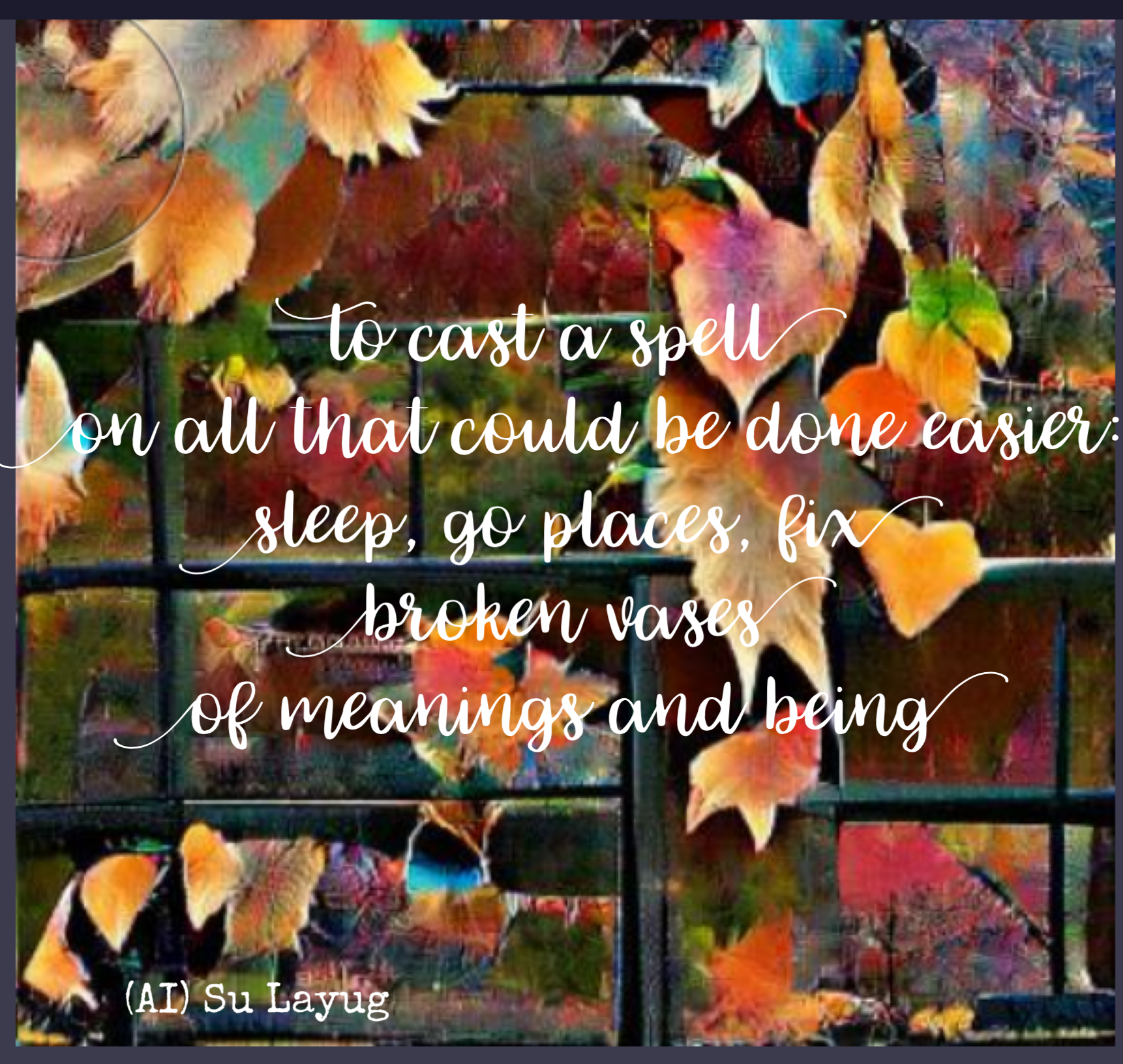
To cast a spell
on all that could be done easier:
to sleep, to go places,
to fix
broken vases
of meanings and being

©su layug (image and verse may be reposted with reference to the creator, Su Layug)
Ang maghasik ng engkanto
sa lahat ng maaaring
gawin nang mas madali:
ang matulog, ang maglakbay,
ang ayusin
ang mga nasirang sisidlan
ng mga kabuluhan
at pagiging nilalang

©su layug (image and verse may be reposted with reference to the creator, Su Layug)
----------------------------------

Two words that were challenging to me, even as I knew what I meant in the original English poem:
- “vases” — the literal translation is “plorera” which is derived from the Spanish “florera” = container for flowers. By using “sisidlan” (container), instead, the reference becomes “container (of different things, both literal and abstract).” The word “vase” here is used in the Greek sense of vase being the same as pot or vessel. https://www.panoply.org.uk/about-vases
- “being” — There is no one word in Tagalog/Filipino that is self-contained in its meaning and connotation that translates back to “being” (the state of existing, or of being alive or real). The word “pagiging” (the state of something) needs to be followed by a noun: “being ___ (human, somebody, a creature). I chose “pagiging nilalang” (being a creation/ being human). The root word “lalang,” which means “create,” leads us to the basic ontological notion that a person is “created” by someone/something/a force beyond such being, an epistemological belief rooted in both pre-colonial and post-colonial Filipino spirituality.
 waterjug