
by Su Layug (also published here: https://medium.com/ai-poetry-and-art)
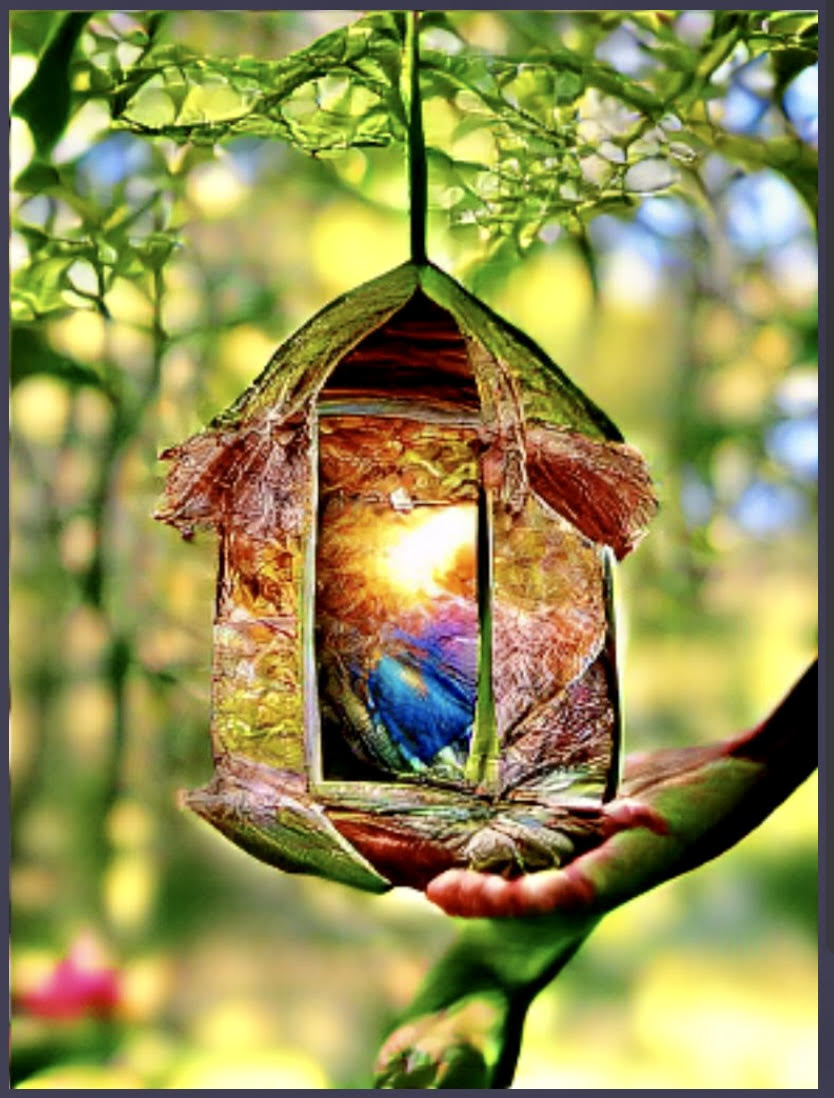
(AI-co-created image using the author’s own photograph)
Resplendent fragile creature,
you are the light and beauty that you seek,
when your sanctuary walls have shed,
and the almighty sun has blessed you,
come out and grace our world.
You’ve always belonged here, too.
Tilas
Maningning na talusaling,
ikaw ang ilaw at gandang hanap mo.
Sa pagbaklas ng santuwaryo mong dingding,
at sa pagpapala ng bathalang sinag,
sumilip ka’t sumali sa aming mundo.
Ito ay mundo mo rin.
Translator’s Notes:
There is a dual or even triple tense/mood in the translation that is not in the original English. Back-translated, the lines can be read in the present: “As your sanctuary walls are shed […] you (now) look outside and join our world.” It can also be back-translated in the imperative mood this way: “When your sanctuary walls will have been shed […] look outside and join our world.” Or alternatively, in the past: “When your sanctuary walls were shed […] you looked outside and joined our world.” And so we find it here that as we switch languages, we switch our paradigms of time, too. And with these, also our worldview. How often do we find that, when we leave our psychic cocoons, we sometimes weave another one into which we retreat, and from which we reemerge (if we ever do) when we are ready to face the world, once again? Life is a constant cycle of advances and retreats, it seems, and we are never finished evolving and devolving until we cease to exist. And even after then, who knows?
 waterjug